
 Click image to view full size image


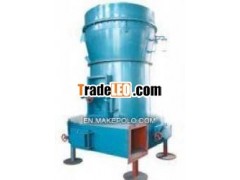
Introduction of Raymond Grinder: Raymond Millis applicable to the grinding and processing of more than 280 kindsof non-flammable and non-explosive materials with hardness lessthan 7 and humidity less than 6% in mining, construction, chemicalindustry and metallurgy, such as barite, calcite, feldspar, talcum,marble, limestone, clay, glass. The fineness of the finishedproduct can be adjusted from 100 mesh to 325 mesh according torequirements. Structural characteristics of Raymond Grinder: thewhole grinding mill is of a standing structure. It features smalloccupying space and strong integration capacity. It can form anindependent production system from the lump materials , crushing tofinished powder and packaging. All the finished particles have agood uniformity of fineness, with passing screen rate as high as98%. This is what other machine cannot reach. The machine adoptselectromagnetic vibrating feeder, which ensures even and regularfeeding. It is easy to adjust, small in dimension, light in weight,with lower oil and power consumption and easy to maintain. Thetransmission device of the main unit is equipped with a closegearbox which ensures its smooth transmission and reliableoperation. Attendance of operater is not necessary in the milloperating room because the adoption of advanced central controlconsole switch. Raymond Mill Working principle: The whole grinderis collocated with jaw crusher, elevator, hopper, electromagneticvibrating feeder, main unit, classifier, collector, cloth dedusterand high-pressure blower. The working principle is as follows: loadthe stuff for grinding evenly and continuously into the grindingchamber of the main frame. Due to the centrifugal force inrotation, the roller swings go outward and presses closely upon thering. The shovel carries the stuff to the space between the rollerand ring. When the roller rolls, the stuff is thus grinded.
Raymond Grinder

Henan Dafu Mechanical Import And Export Co., Ltd.
